


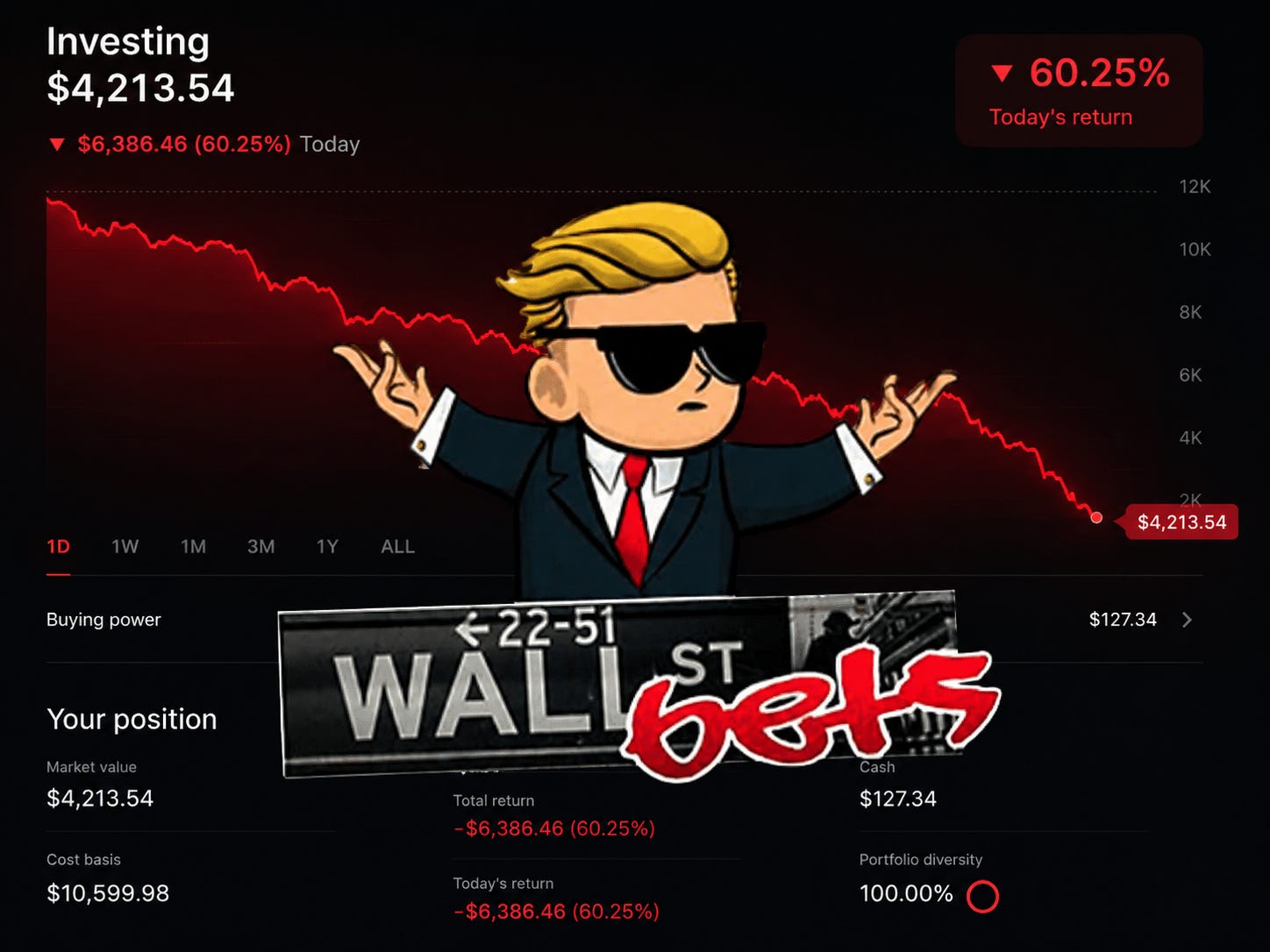
I’ve been making the rounds on social media, looking through Reddit threads, looking through FinX.
It baffles me how many people treat the markets like a casino and take unnecessary, huge drawdowns in their account.
We’re living in an era where a big drawdown is almost a badge of honor.
Where I Am Right Now
Full disclosure on my own account, because I’m not writing this from the sidelines with nothing on the line.
My rules are keeping me out of the market until we trend higher. As of writing this, July 29th, we’re below declining moving averages. In my active brokerage account, the aggressive one where I trade a growth momentum strategy, I’m 10% invested. One position. Snowflake (Holding from an entry in June).
As the market improves, I start to ease my way back in to building up positions again.
Losing Money for Karma
I remember when WallStreetBets first came out in 2012.
It started off as kids who were trading options, and it was a place to go to feel better about losing all your money. You would blow up your account, but the trade-off would be that you would get a bunch of karma on the subreddit.
I never found that to be a great trade-off. I’ll take the money every time.
The “GameStop era” and that period where meme stocks were taking off, made phrases like “diamond hands” popular. It became a badge of honor to have massive drawdowns in your account, because it showed some sort of character that you had.
I actually got banned from the subreddit after suggesting sell rules. I guess I came off preachy, and it still makes me laugh to this day.
The Narrow Area Where You Have to Be Right
Investors have to understand that this “buy-the-dip” narrative is not a real strategy.
Dollar-cost averaging down (which means buying more of a stock that’s falling to bring your average cost down) is the fastest way to go broke. You’re operating in a narrow area where you have to be right.
There’s no other way around it. If you are not right, everything is gone.
I don’t find that to be an asymmetric risk. That’s the opposite of that. It’s a ton of risk.
The Line I Draw
I’m not completely against buying weakness. One of my best setups is the upside reversal, which is a dip within itself. But it’s a pullback to key support within a sustained uptrend.
I know that if the stock trades below the low of that support day, I was wrong and it’s time to close the trade.
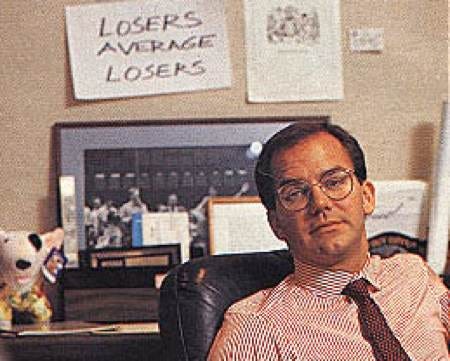
I also never add to a losing position. As Paul Tudor Jones famously taught us:
“Losers Average Losers.”
When the market direction is against you, stocks are below key moving averages, and there’s red in your account, you’re essentially attempting to catch falling knives.
That’s not a game I like to play.
Where This Logic Flips
Now, in a long-term strategy where this makes sense: indexing.
By nature of the index, you don’t have to be right. You can be somewhat wrong, because you’re betting on the economy of the United States. If that goes to zero, then we have bigger problems. It’s gonna be the purge out there.
My own IRA account is in QQQ/VOO, and the strategy there is simply time + compounding.
The One Non-Negotiable
You can trade whatever strategy you want. If you feel like there’s value in the market, that’s okay.
But my one non-negotiable would be this: if you buy a stock, know exactly what price means that you’re wrong, and have a plan to get out.
Most strategies can work with an exit plan.
You can look through the history of the stock market over the last hundred years and see a graveyard of stocks that never came back, or, if you’re lucky, came back in twenty years to the same level. It happens all the time:
Beyond Meat, Peloton, and Red Robin were all hot stocks at some point. If you aggressively “bought the dip” on those, your account is in the brokerage graveyard as well.
Because if you can’t decide when to get out of the market, the market will decide for you.
totally agreed. I only do it for my long term SPY investment
I liked your point about having an exit plan. I think that's easy to overlook.