


One trade paid for the down payment on my first house.
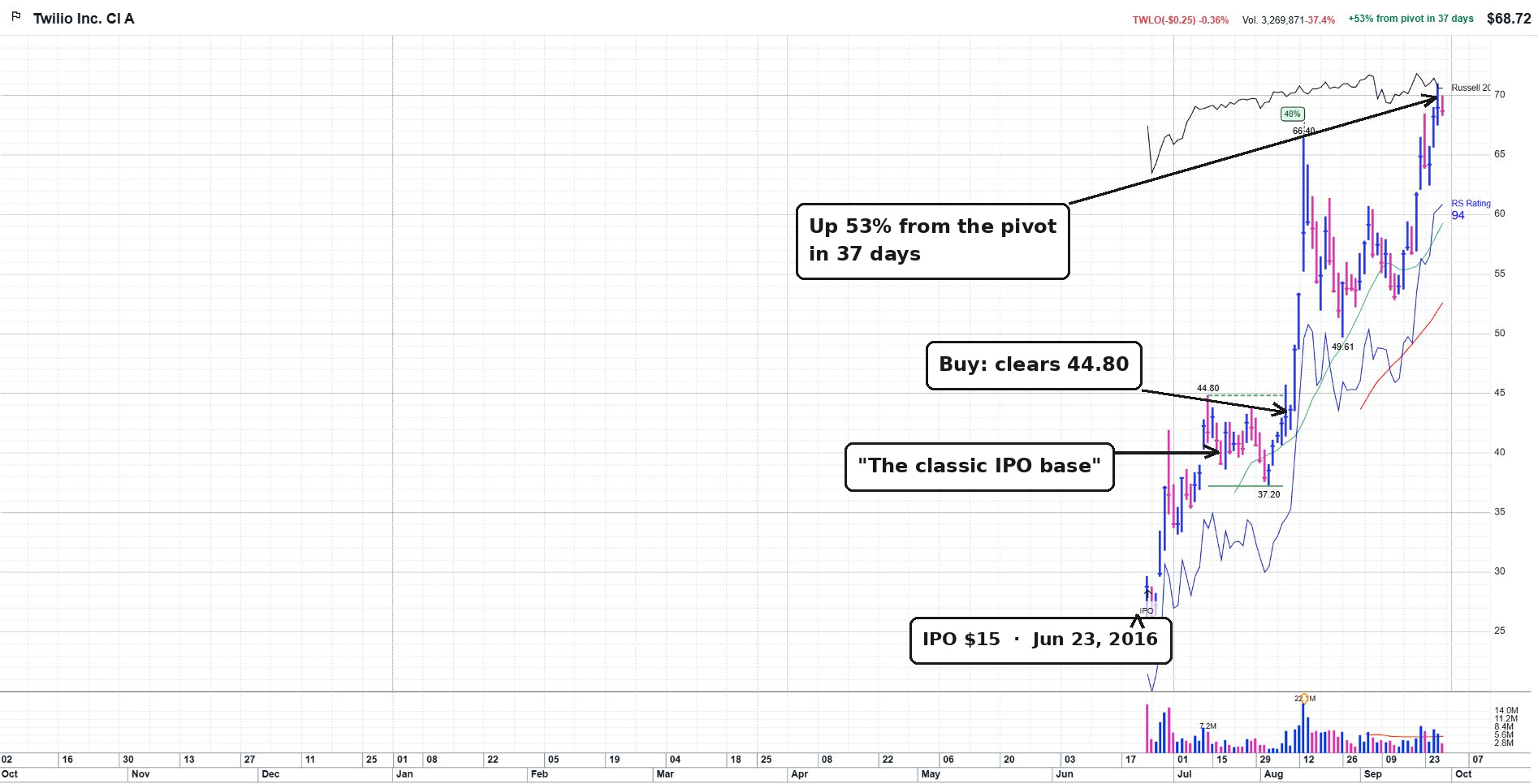
June 2016. Twilio went public, and everyone in tech was buzzing about it. By then I was a few months removed from my time inside William O’Neil’s organization, working in software sales, watching the market from the cheap seats.
And I did the hardest thing a trader can do with a hot new stock.
Nothing.
No buy at the open. No chasing the first pop. I just watched it trade. A few weeks later, Twilio quieted down and built a short, tight shelf of price action. A classic IPO base. When it broke out of that base, I bought it. Heavily. It was a swing trade that ran 50 percent in a few weeks, and it was about as close to a perfect trade as I’ve ever made.
That trade became the down payment on my first house. That house got me to Austin in 2018.
The whole trade was decided before I ever clicked buy. It was decided in the weeks I spent waiting.
Tomorrow, SpaceX lists on the Nasdaq.
Ticker SPCX. Priced at $135 a share. Roughly a $1.75 trillion valuation and a $75 billion raise, which makes it the largest IPO in stock market history. Nearly three times the size of Saudi Aramco’s record.
Every headline, every group chat, every guy at the office who has never mentioned a stock in his life will be talking about it tomorrow.
Which is exactly why I want to talk about the IPO base today.
The problem with day one.
A stock that just went public has no price history. None.
No support levels, because nobody has defended a price yet. No resistance levels, because nobody is trapped above the market waiting to sell at breakeven. No read on what institutions are doing, because they just got their shares this morning.
When you buy an IPO at the open, you are trading blind against insiders and funds who know exactly what their stock cost them. They have all the information. You have a headline.
The fix is simple. Let it trade.
I learned IPO bases studying Mike Webster’s work in his masters program, and his IPO study is the cleanest framework I’ve seen on the subject. Full credit to Webby here. The core idea is this:
Give a new stock a minimum of two weeks. Most proper IPO bases take two to five weeks to form. In that time, the stock corrects or goes sideways, and something valuable happens. Price history gets created. The pullback lows become support. The early highs become resistance.
Now you have a structure. A short consolidation with a defined ceiling. And when the stock breaks through that ceiling on real volume, you have an actual entry with an actual stop underneath it.
You went from gambling on a headline to trading a setup.
Google did it the textbook way.
Google came public in August 2004 at $85 and popped about 27 percent. Then it spent roughly five weeks doing nothing. Drifting sideways, volume drying up, building the base.
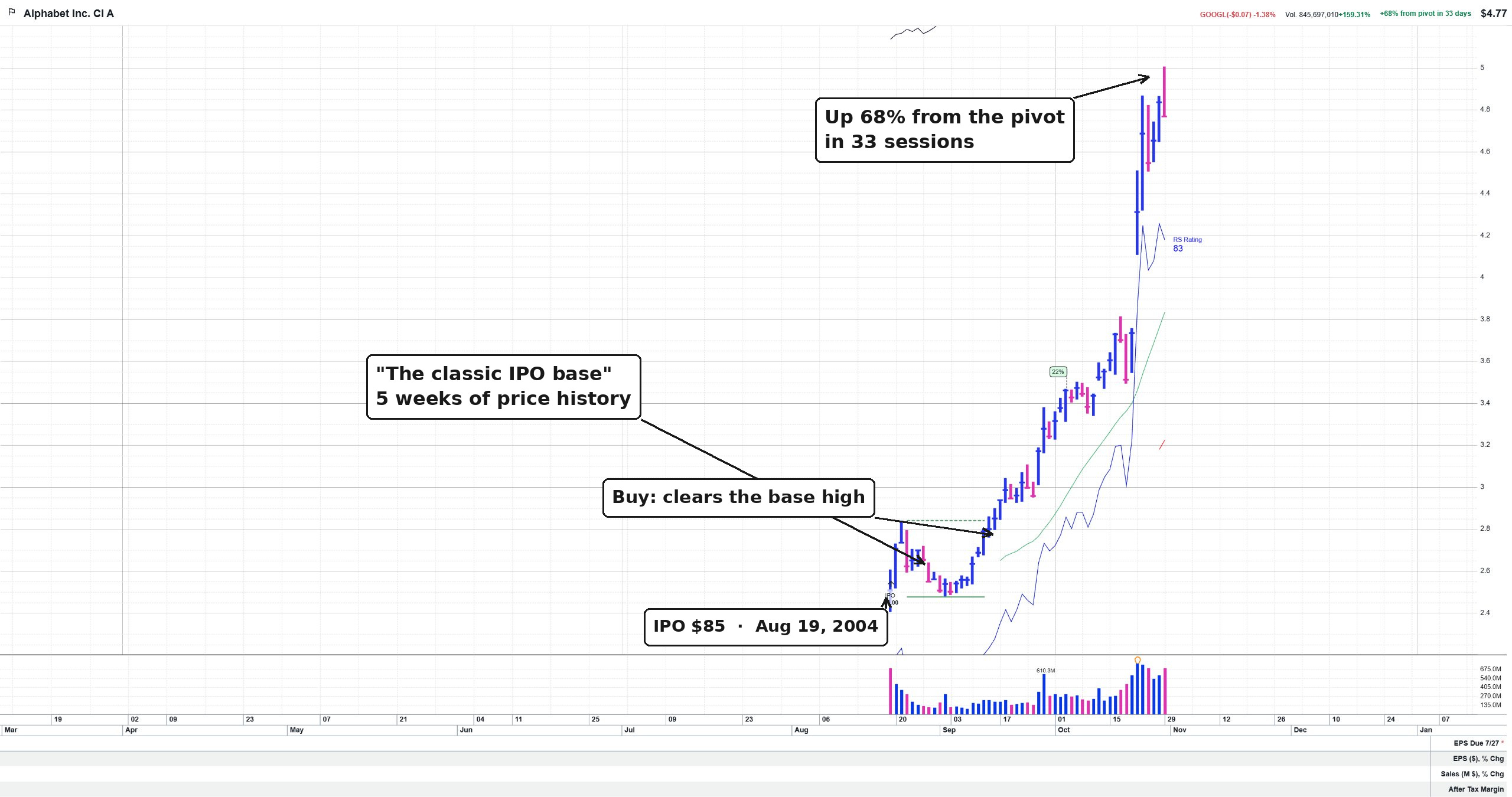
When it cleared the top of that base, it ran 68 percent in 33 trading days. The patient buyer got a defined entry, a defined stop, and the entire move. The day one buyer got the same move with five extra weeks of stress and no risk management.
Boston Beer never gave you one.
Sam Adams went public in November 1995 at $20 and popped 63 percent on day one. Huge brand. Beloved product. Maximum hype.
It never formed an IPO base. It just rolled over.
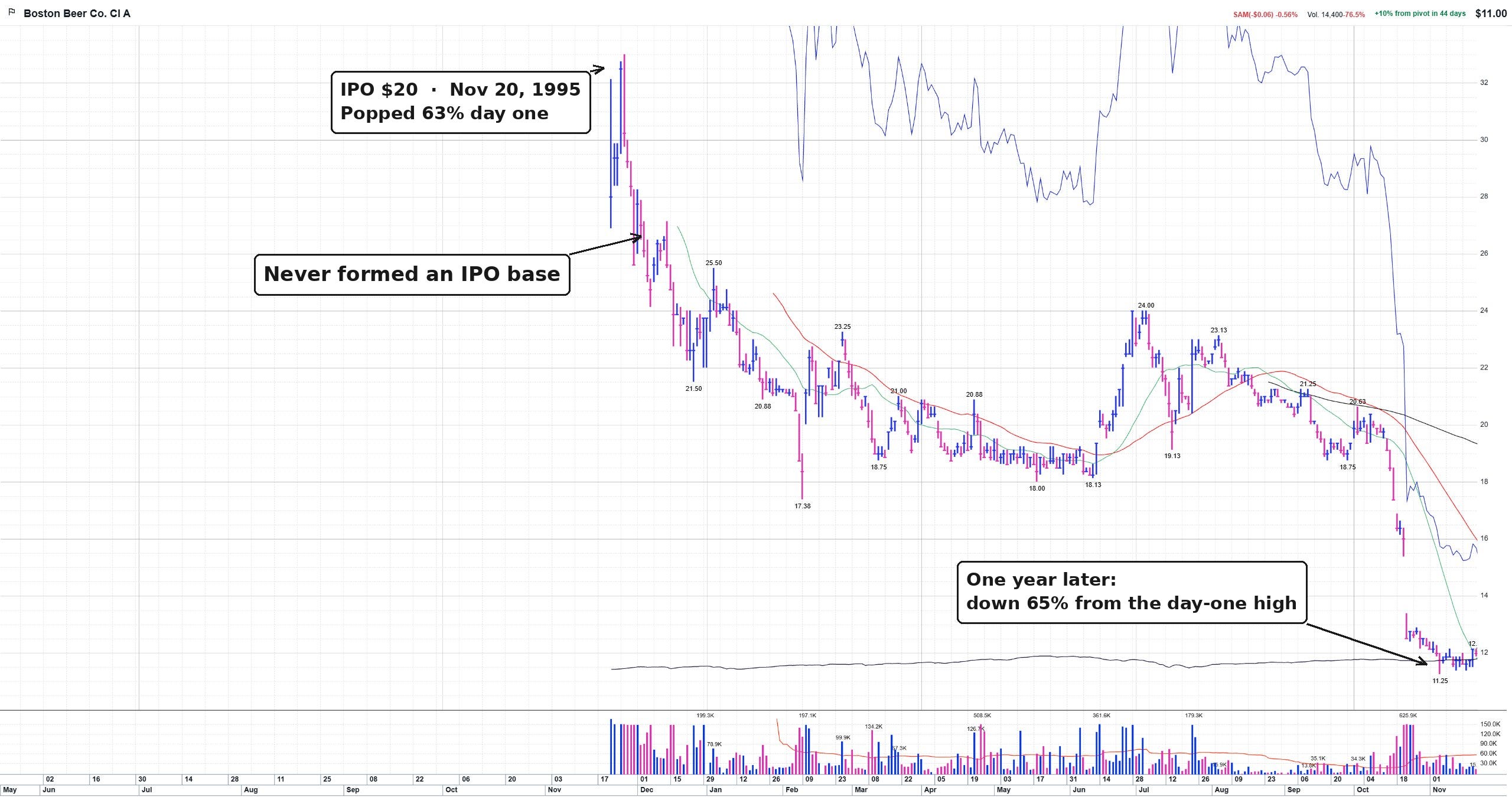
Two years later it was an $8 stock, down roughly 75 percent from that day one high. Anyone who chased the open owned every point of that decline. Great company, great beer, brutal trade.
That’s the part nobody tells you. Some IPOs never give you the setup. The base requirement protects you from those too, because no base means no trade. Passing is a position.
So here’s my plan for SPCX.
Watch. Two weeks minimum, no exceptions, no matter what it does out of the gate.
If it builds a proper base, it goes on my watchlist with a defined buy point and a defined stop, and you’ll see it in the weekly plan. If it never sets up, I’ll let the biggest IPO in history sail right past me, because there is always another trade and staying in the game is rule number one.
The analysis tomorrow is the easy part. Sitting still while everyone around you buys is the hard part.
Twilio taught me that the waiting is the trade.
None of this is financial advice. I’m one trader documenting my process in real time. Do your own work and protect yourself first.
I liked the point that passing is a position. Absolutely is! That seems like good advice in more than just trading