


1994 was a landmark year for a few reasons.
It was the greatest year in the history of film. Pulp Fiction, The Lion King, The Shawshank Redemption, and Forrest Gump all came out in one year, which still boggles my mind.
It was also a pivotal year for the internet, which has been the greatest invention of the modern era, until now, with AI.
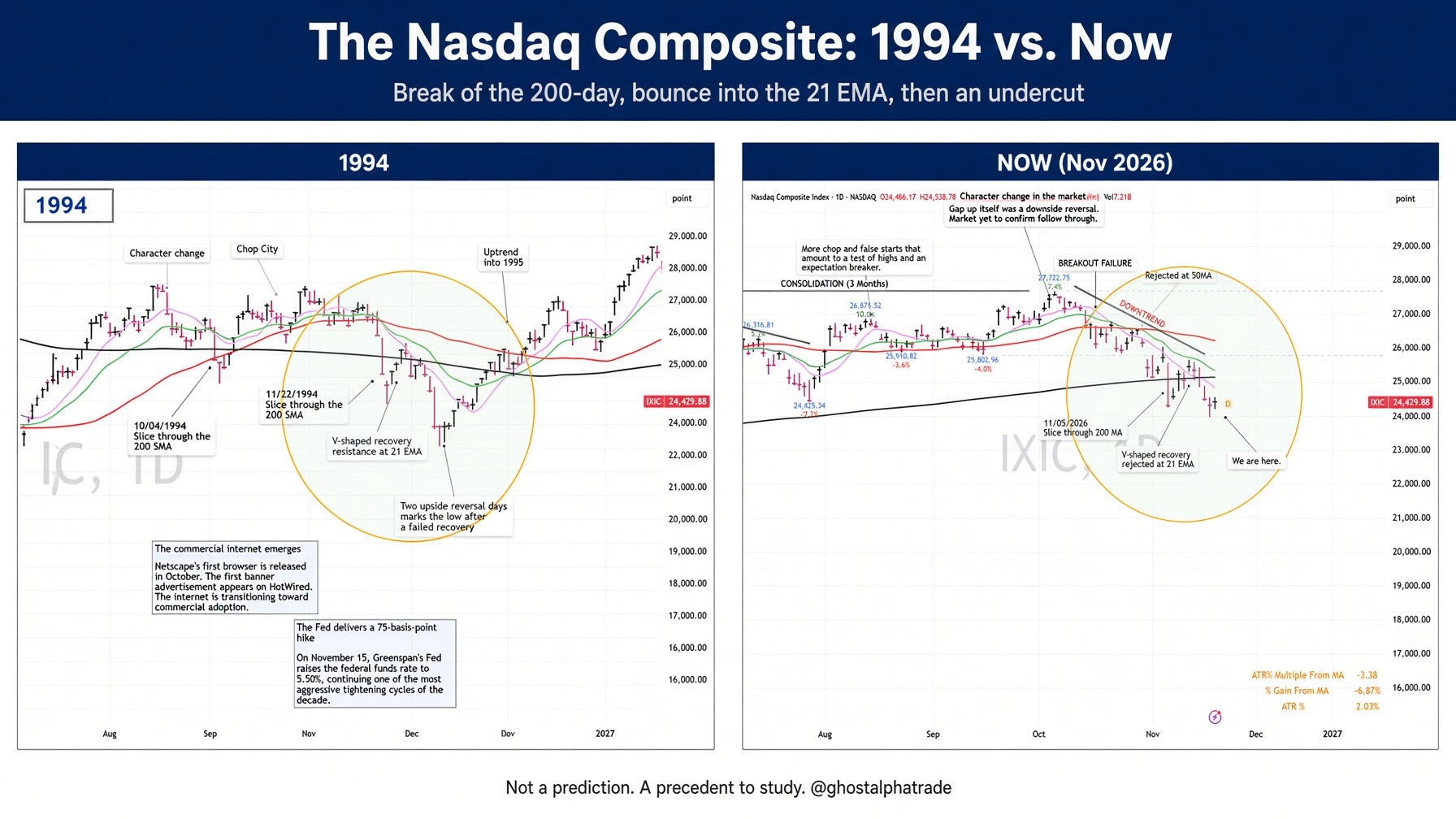
Because of recent market pressures, I went down a rabbit hole by going through every time the Nasdaq made a decisive cut through the 200-day moving average and then bounced quickly. Nothing looked like-for-like.
The closest market was 1994.
Where we are now in 2026
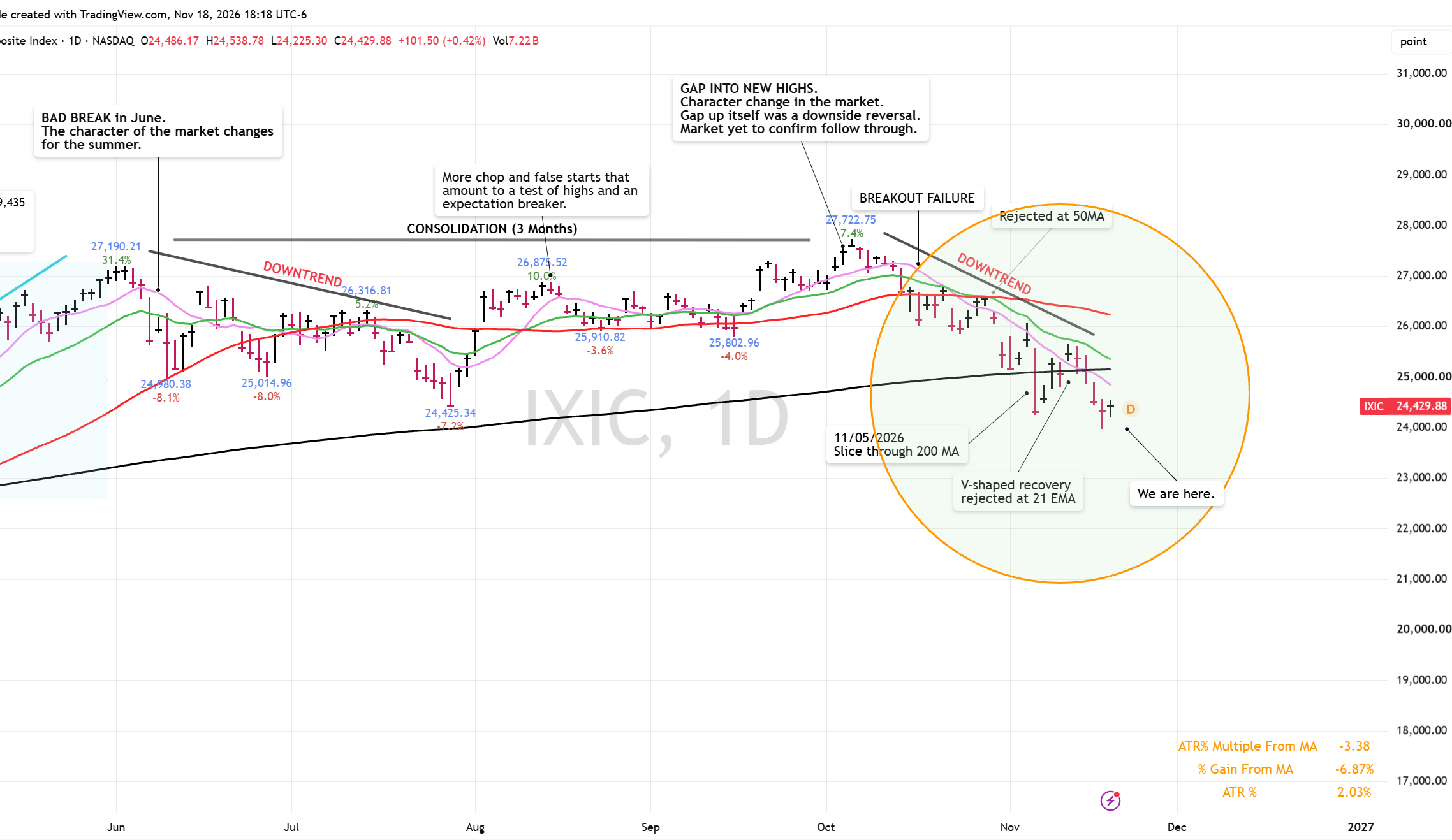
This is the second time in 2026 that we’ve cut below the 200-day. The first led to a rally from late March into the summer.
This time we had a quick cut, a V-shaped recovery into the 21 EMA, and resistance from declining moving averages.
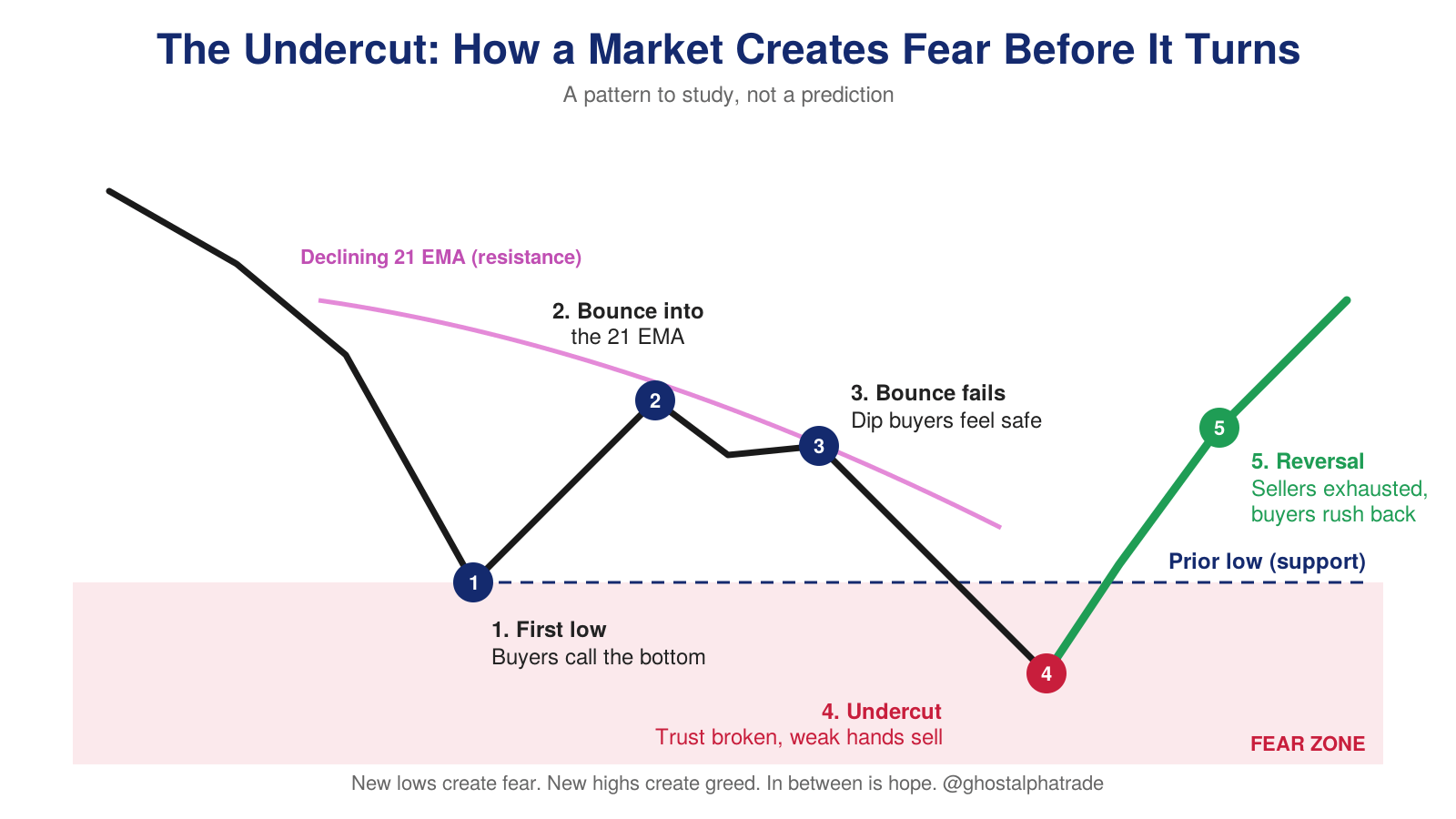
Then came the undercut.
The Nasdaq’s low on November 5 was 24,262. On November 17, the low was 23,989, a slight undercut of that level. On November 18 we closed +0.42% on a tight inside day.
1994: a year to study
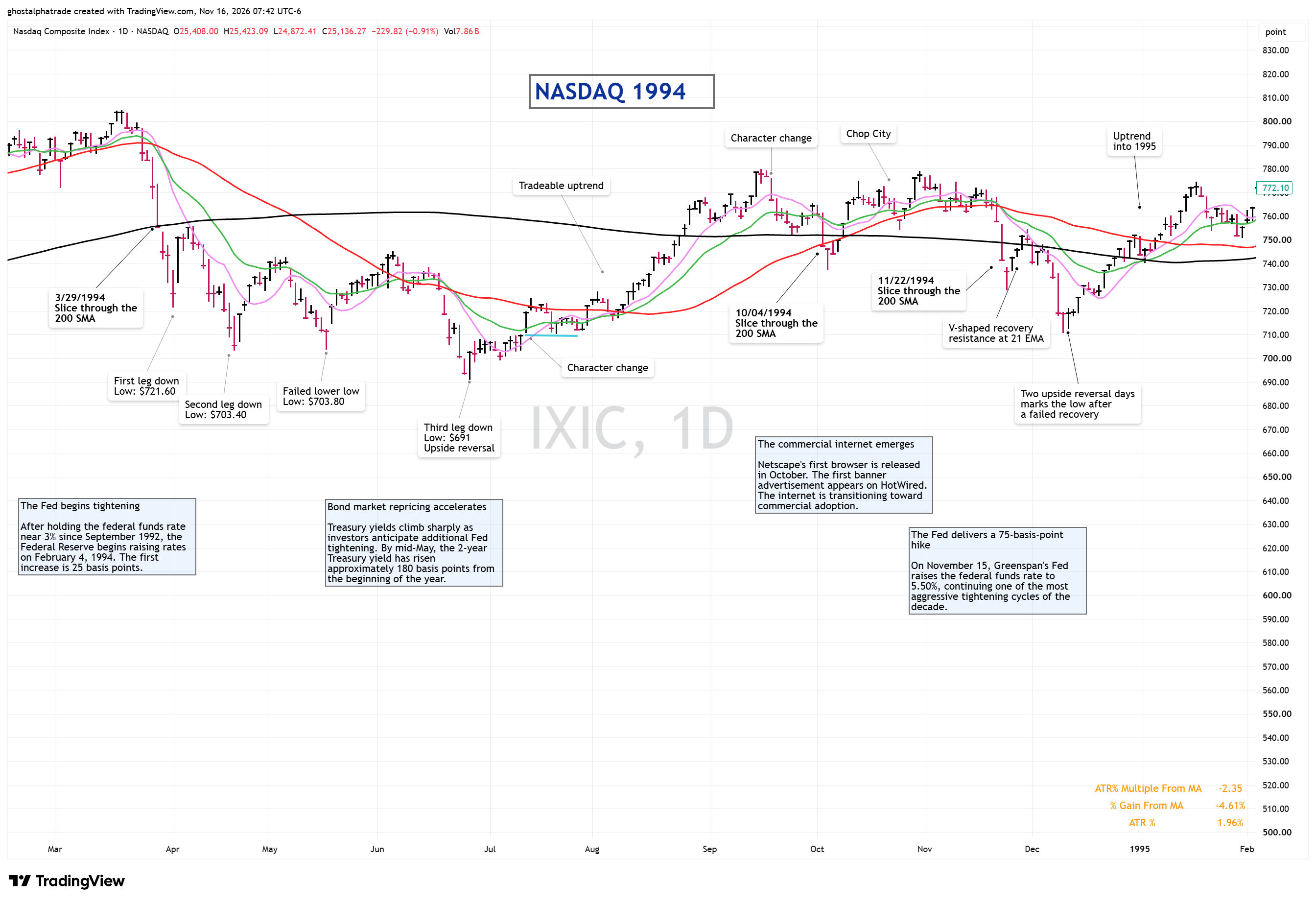
1994 had three decisive breaks of the 200-day: 3/29, 10/04, and 11/22.
The last one is worth a closer look.
It broke, bounced right back into the 21 EMA, and failed. Then the market undercut the recent lows. The 1994 undercut was far more aggressive than what we’ve seen so far, so it remains to be seen if this one is enough. After the undercut came two upside reversal days.
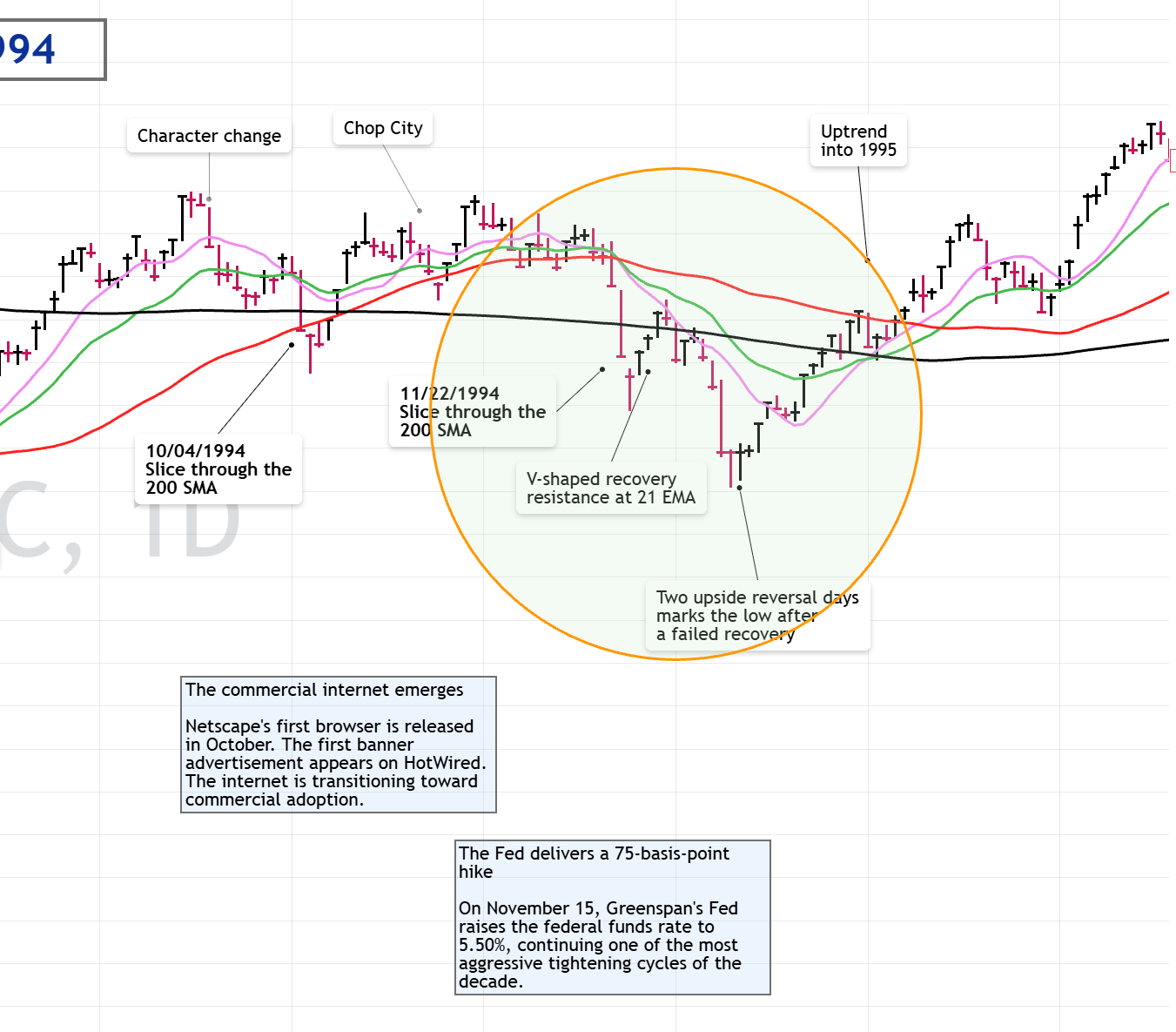
Then a powerful uptrend in 1995 where fortunes were made.
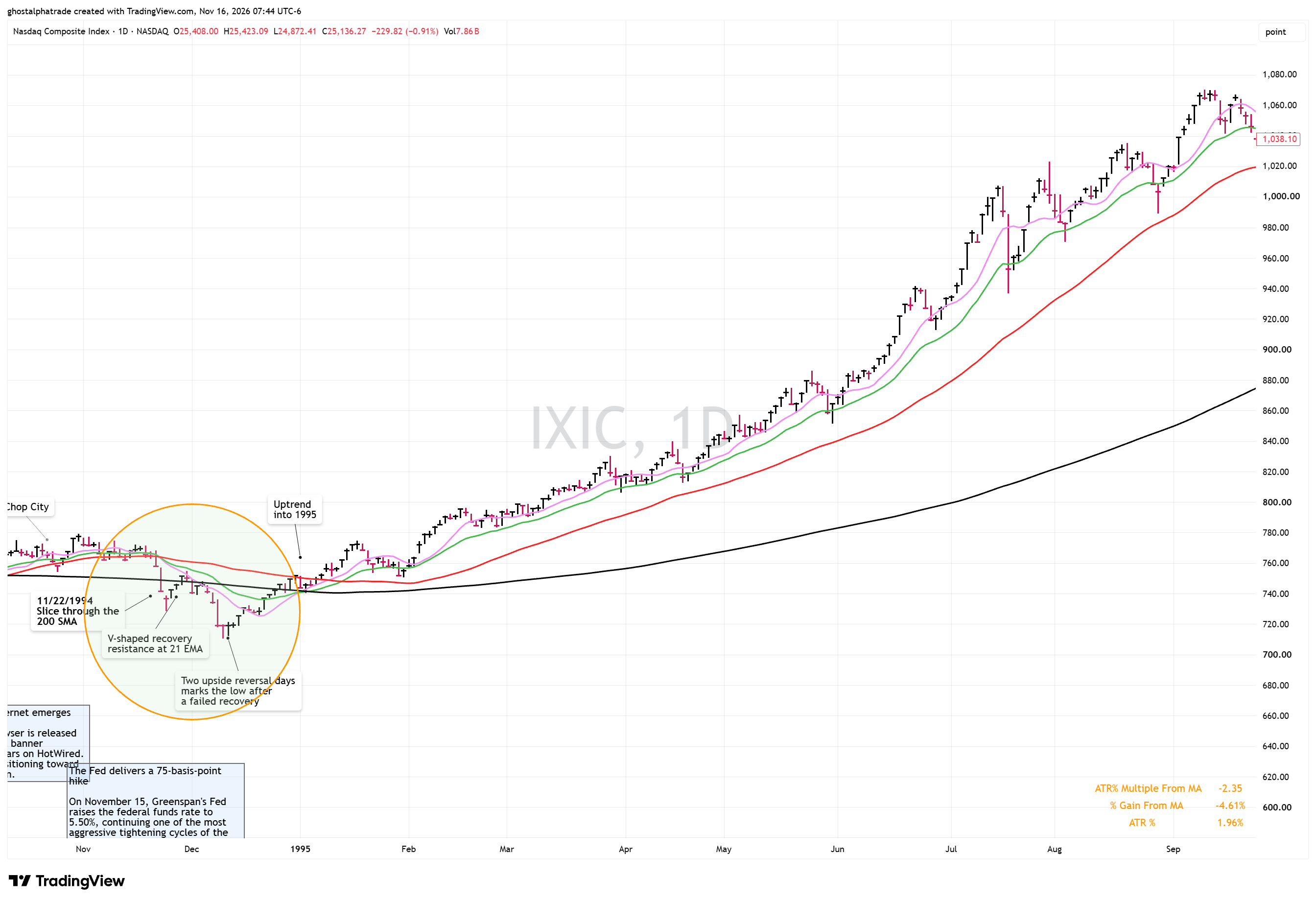
Here is a side-by-side comparison of 1994 and today:
The mechanism: why the undercut matters
Markets are driven by fear, greed, and hope. New lows create more fear, new highs create more greed, and most of what’s in between is hope.
In a pullback, the bulls treat every bounce as the bottom. Then the market undercuts the low and breaks that trust. Those overeager buyers go to fear and doubt. That is the psychological environment where good runs start, because shaken-out hands come back late and add momentum.
Shakeouts show up in individual stocks too. Take, for example, the cup with handle.
The cup is the consolidation, and the handle is the shakeout before the move higher. The same idea works in the indexes. The buy-the-dip crowd has dried up lately. You can’t measure that without a survey, but price shows it first. Sentiment is a secondary indicator for me.
Precedents are not GPS
I will always primarily follow price.
A precedent is not Google Maps. The market owes you nothing, and it can follow a precedent or make a new one. What a precedent does is keep you open-minded. An idea of what’s possible.
My process for acting on it: the double upside reversals would get me looking harder at leaders and what’s setting up, because the stocks have to be there too. I wouldn’t get involved until we’re back above the 21 EMA, a strategy I have covered here:

What would prove this all wrong? Price.
A failed rally. So would more chop. Use the 21-day system to scale you in or out of the market.
The macro rhyme
Rates rhyme too, with a catch. In 1994 the Fed took rates from 3% to 5.5%, and the 10-year yield went from about 5.77% to a peak of 8.03% on November 22, the same day as the 200-day slice.
Today the Fed has hiked once, in September, to 3.75-4.00%. The 10-year is around 5.10%, near its highest since 2007. Rates are hurting real estate and small caps.
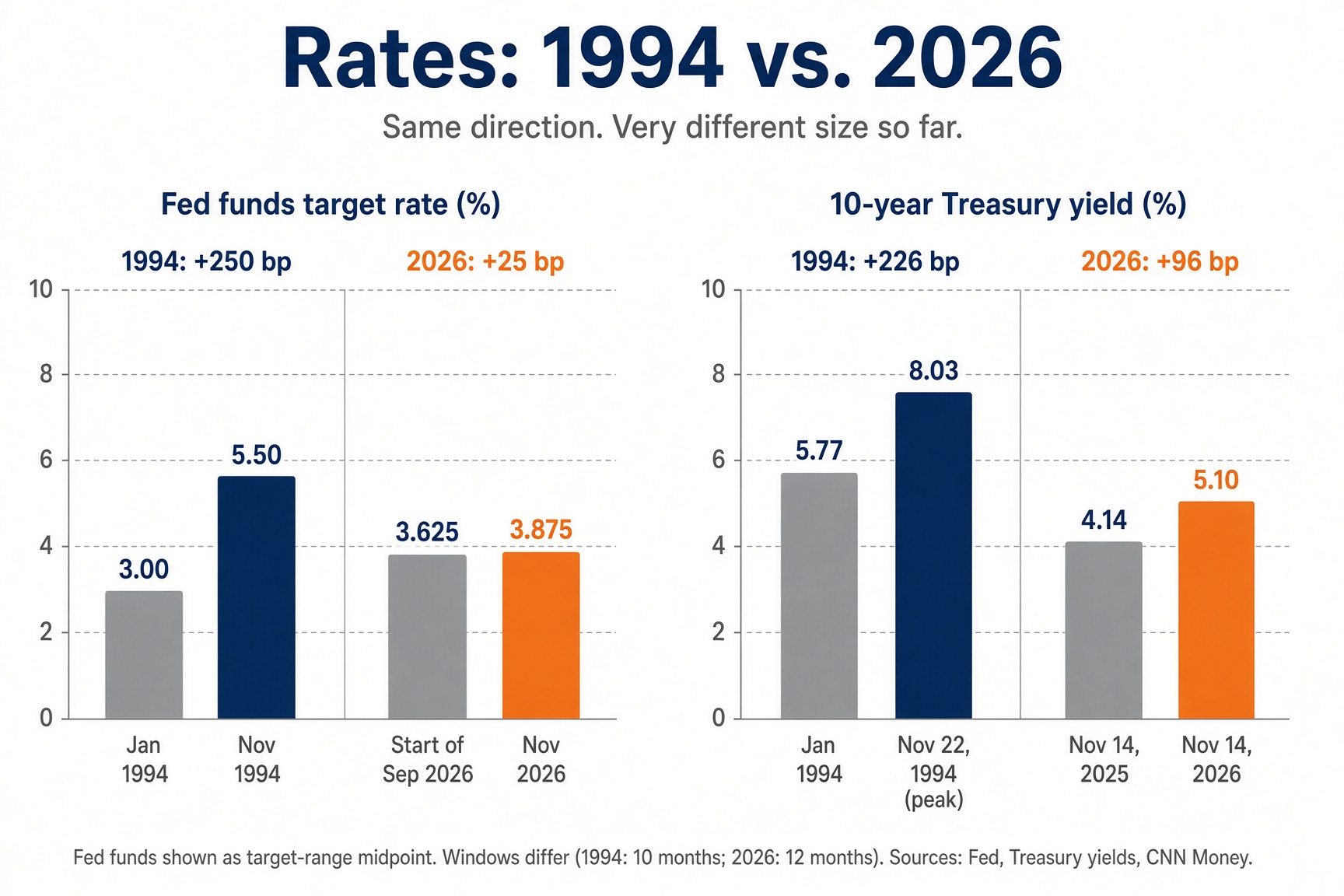
The direction matches, but the scale doesn’t yet. In 1994 the Fed was 250 basis points into tightening. Today it’s 25. So watch how bonds react.
I also try not to see this everywhere. When you’re looking for something, you see it. So I let price validate it.
The build-out and the gateways
1994 also led into the internet era and the dot-com boom. I’ve tracked that rollout as a precedent for AI.
For a while the index rhymed with 1999, and I dove just as deep into the research as I did here. I was not going to miss the next Qualcomm run.
Then price proved me wrong.
That may be great news, since 1999 was the ninth inning. If 1994 is the better precedent, the AI trade is much earlier in its development.
So far the AI run has been about infrastructure: data centers, semis, and so on. That’s in a corrective phase. Stanley Druckenmiller recently said he is now looking for more AI use cases. In my own view, medical technology may be well positioned for that.
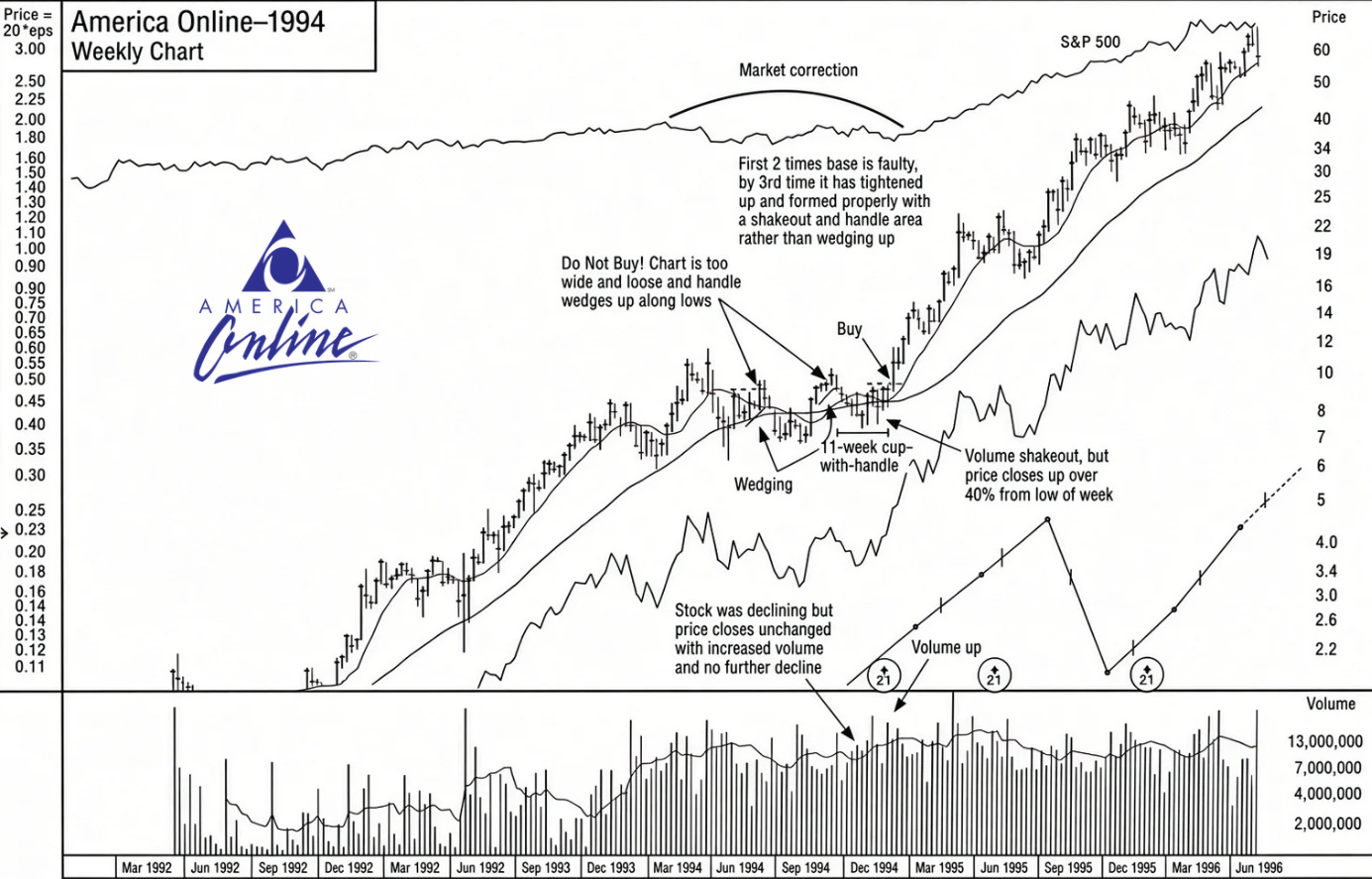
The other piece is the gateway. In 1994 that was America Online.
For many people, AOL was how you reached the internet. I remember AIM being the most popular way to chat in high school. Cisco and Qualcomm were big winners in 1999, so infrastructure didn’t go away. But you also needed AOLs, the connection to the consumer.
Who is the AOL for AI? We haven’t had it come to market yet. Anthropic is slated to IPO tomorrow, November 19th, and OpenAI is expected at some point. I’m not saying any of them is AOL. I’m saying you have to watch for gateways.
The hedge
This is not a prediction. It’s a precedent. I’ve learned my lesson plenty of times over trying to guess which way the market is going to go.
But I study markets because I love what I do. I refuse to get caught off guard and miss the opportunity to maximize a golden era of trading.
If it doesn’t work out, I’ll most likely be in cash, with price trending down and forcing me out.
If it does work out, that’s a different story.
In my view your 21 EMA line is the one that matters, and I'm with you on it. Meanwhile, Japan's Nikkei closed 2.8% lower at 57,011.62 this morning.
Does the 1994 script say how deep that final undercut usually runs?